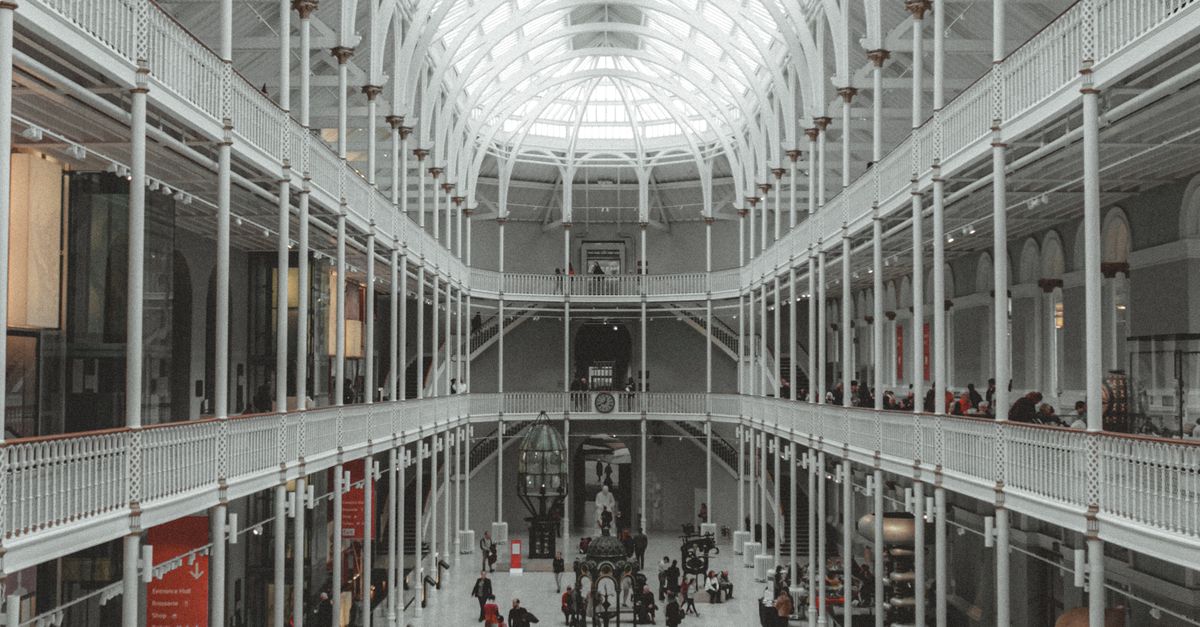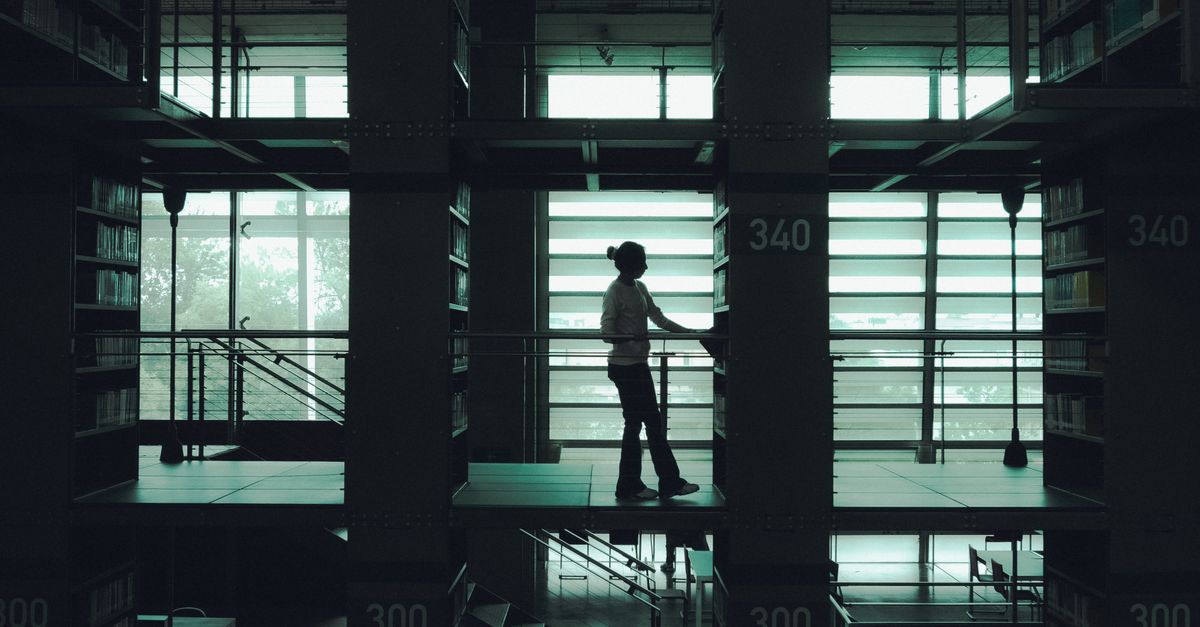
The most impressive libraries do more than simply store books. Certain ones employ architecture to honor education as a public benefit, while others influence how patrons circulate, study, and convene. Spanning four continents and almost three hundred years, this lineup highlights structures featuring unique design work, unforgettable interior spaces, and a profound connection linking their physical form with their underlying function. Rather than serving as an exhaustive hierarchy, the collection represents a thoughtfully curated overview.
1. The Old Library at Trinity College Dublin, Ireland
Completed in 1732, the Old Library is best known for its Long Room, a book-lined hall approximately 65 meters long. Dark timber shelves, a central aisle, and a barrel-vaulted ceiling give it an extraordinary sense of depth. The vault was added in the nineteenth century as the collection grew, making the room a record of the library’s changing needs as well as a striking interior.
The building shows how repetition can create drama: shelves, windows, and structural bays draw the eye toward the far end of the hall. Major conservation work has affected the display and movement of books, so visitors should check current access arrangements.
2. Admont Abbey Library, Austria
Completed in 1776, Admont Abbey Library is one of the great eighteenth-century library interiors. Its hall stretches roughly 70 meters beneath painted ceiling panels, while white shelving and gilded details reflect light throughout the room. Sculptures and paintings express the idea of knowledge as a path toward understanding.
Its structural strength lies in that unity of purpose. The books, artwork, daylight, and long central axis are arranged to make learning feel expansive and ceremonial. Visitors should also remember that this is part of an active religious institution, not simply a historic display.
3. Royal Portuguese Reading Room, Brazil
In Rio, the Royal Portuguese Reading Room offers a different kind of grandeur. Opened in 1887, it has a richly carved stone exterior and a soaring reading room wrapped in tiers of bookshelves. An overhead glass feature brings light into the dense, ornate interior.
The contrast is its defining experience: a relatively contained city frontage gives way to a tall space filled with books and intricate detail. Its vertical shelves make the collection itself the dominant architectural feature.
4. Thomas Jefferson Building, Library of Congress, United States
Opened in Washington in 1897, the Thomas Jefferson Building presents a national library as a public monument. Its Great Hall combines marble, mosaics, sculpture, and painted decoration; the Main Reading Room sits beneath an immense dome.
The design makes a clear civic argument: knowledge deserves the scale and care often reserved for seats of government. It is especially impressive for the transition from decorated entrance spaces to the more focused geometry of the reading room. Visitor routes and researcher access are separate, so a tour does not necessarily include every space.
5. Beinecke Rare Book and Manuscript Library, United States
Established at Yale University during 1963, the Beinecke Library addresses a distinct architectural challenge remarkably well. While rare manuscripts require shielding from harsh sunlight, visitors still thrive on natural illumination. Its translucent marble slabs filter a gentle radiance inside while safeguarding the delicate archives.
Inside, a glass-enclosed tower of books becomes the visual center. From outside, the building reads as a restrained geometric block; from inside, light passing through the stone gives the space warmth. Its beauty comes from making a practical conservation requirement visible.
6. Alexandria’s Modern Library, Egypt
Opened in 2002, Alexandria’s modern library uses a vast, tilted circular form to evoke the sun and the city’s long association with scholarship. A carved stone wall, broad plaza, and water features give the building a strong presence on the waterfront.
Its stepped reading hall is the essential interior experience. Rather than placing readers in one flat room, the design spreads them across descending levels under a broad roof. The result balances the scale of a major cultural institution with spaces intended for concentrated study.
7. Seattle Central Library, United States
Opened back in 2004, the Seattle Central Library defies traditional notions of uniform, stacked levels. Enclosed within its striking angular steel-and-glass facade, various zones are dedicated to distinct functions, ranging from civic events to quiet study and investigation. Spanning the entire nonfiction inventory, an uninterrupted pathway—referred to as the book spiral—enables visitors to navigate between tiers seamlessly, eliminating the division of floors into isolated collections.
The building’s striking exterior is therefore more than a sculptural gesture. Its form reflects an effort to accommodate books, digital information, staff work, and public life within one connected library.
8. Stuttgart City Library, Germany
Opened back in 2011, Stuttgart City Library presents a nearly cubic volume whose understated facade gives way to a striking white atrium. A soaring central void is defined by overlapping balconies, staircases, and shelving tiers, whereas the vibrant hues within are primarily provided by patrons and their reading materials.
Where older libraries often use ornament to communicate importance, Stuttgart relies on proportion, symmetry, and light. The clearest architectural experience comes from moving upward and looking back across the open interior: each level changes the view while preserving the building’s calm overall composition.
9. Tianjin Coastal Library, China
Opened in 2017, this library in Tianjin is known for its sweeping terraced shelves and a spherical auditorium at the center. Its interior creates a landscape of steps and curves rather than conventional rows of stacks. A glazed front makes that sculptural arrangement visible from outside.
It is definitely worth examining closely how visual elements and utility diverge in this context. Not every surface that looks like a shelf actually holds reachable books; certain elevated areas instead rely on printed graphics. Nevertheless, the undertaking stands as a compelling illustration of a library conceived as a venue for community assembly and civic theatricality alongside traditional reading.
10. Qatar National Library, Qatar
Opened in 2018, Qatar National Library brings a vast collection into an unusually open, connected space. Its angular exterior encloses broad terraces of books, giving readers long views across the building. A lower central area presents heritage materials as a visible part of the library rather than an isolated afterthought.
The design makes a large institution feel easy to survey. From many positions, visitors can see collections, study areas, and routes through the building at once. Its architectural achievement is not just its scale, but the clarity with which that scale is organized.
What sets these libraries apart?
These buildings use architecture to answer different questions. Admont and Trinity College Dublin turn long reading halls into memorable journeys. The Library of Congress and the Royal Portuguese Reading Room give books a ceremonial setting. Beinecke carefully controls light to protect fragile works, while Seattle, Stuttgart, Tianjin, and Qatar experiment with how a modern library can guide movement and invite the public in.
The most rewarding visit is not always to the largest or most photographed building. It is to the one where you can see how its spaces shape the experience of learning—whether through a quiet pool of daylight, an uninterrupted wall of books, or a room designed to bring readers together.